The clip carried a simple text overlay explaining why she'd picked that particular song: she couldn't stay quiet, it said, and wanted her voice standing alongside every student out protesting. It's a short line, but it does a lot of work — "Luka Chuppi" was written by Prasoon Joshi and originally sung by Lata Mangeshkar for a film that, itself, was about young people pushed toward activism by circumstances they didn't choose. The original number was picturised on Waheeda Rehman and R. Madhavan, playing a mother's grief and, by extension, a kind of generational reckoning — themes that Royal's choice of song seems to be leaning on rather than spelling out directly.
In her caption, she went further, calling for calm rather than escalation. She said her prayers were with those already affected and that she hoped there would be no further injuries, adding that she wanted dialogue — not division — to guide things toward a peaceful resolution. It's a carefully worded post, sympathetic to the protesters without wading deep into the specifics of who's right.
Those specifics, for context, involve a genuinely tense few days on the ground. On Monday, clashes broke out as thousands of demonstrators — students alongside supporters of the Cockroach Janata Party — marched from Jantar Mantar toward Parliament. Their central demand: the resignation of Union Education Minister Dharmendra Pradhan, over what they describe as recurring failures in India's examination system, including leaked papers tied to the NEET-UG medical entrance exam. Delhi Police have said the violence that followed will be investigated thoroughly, though details of that inquiry are still emerging.
The protests have drawn a wider cast of voices beyond students themselves — opposition figures and activists have joined in, framing the issue as one of accountability rather than just exam logistics. Whether that framing holds as the situation develops is, like most things involving competing political interests, still an open question.
Royal's decision to reach for "Rang De Basanti" specifically isn't incidental either. The film, directed by Rakeysh Omprakash Mehra, follows a British student who travels to India to document five freedom fighters from the independence era, only to find the young men she casts drawn into their own confrontation with modern-day injustice. It starred Aamir Khan, Siddharth, Sharman Joshi, Kunal Kapoor, Atul Kulkarni, Soha Ali Khan, Alice Patten, and Madhavan, with Waheeda Rehman, Anupam Kher, Kirron Kher, and Om Puri in supporting roles. Nearly twenty years on, it's still the reference point plenty of people reach for when talking about youth-led defiance in India — which is presumably why Royal reached for it too.
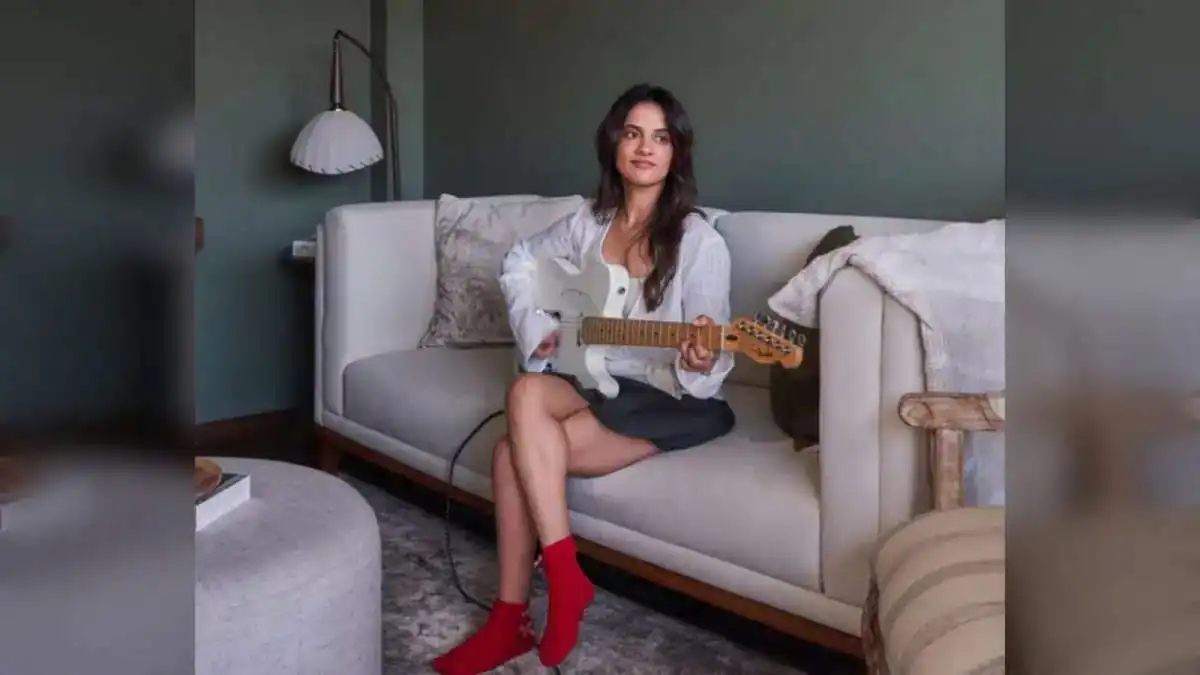
For Royal herself, this marks a fairly rare moment of public political engagement. She's better known for her work as a playback singer, having entered Hindi film music back in 2014 with "Preet," a track from the Sonam Kapoor and Fawad Khan film "Khoobsurat." Since then, she's mostly stayed associated with music rather than commentary — which is part of why this post has drawn as much attention as it has. It's not every day an artist known for staying in her lane steps, however gently, into a live and unresolved national conversation.
As of now, neither the education ministry nor Minister Pradhan's office has issued a public response to the renewed protests or the calls for his resignation.